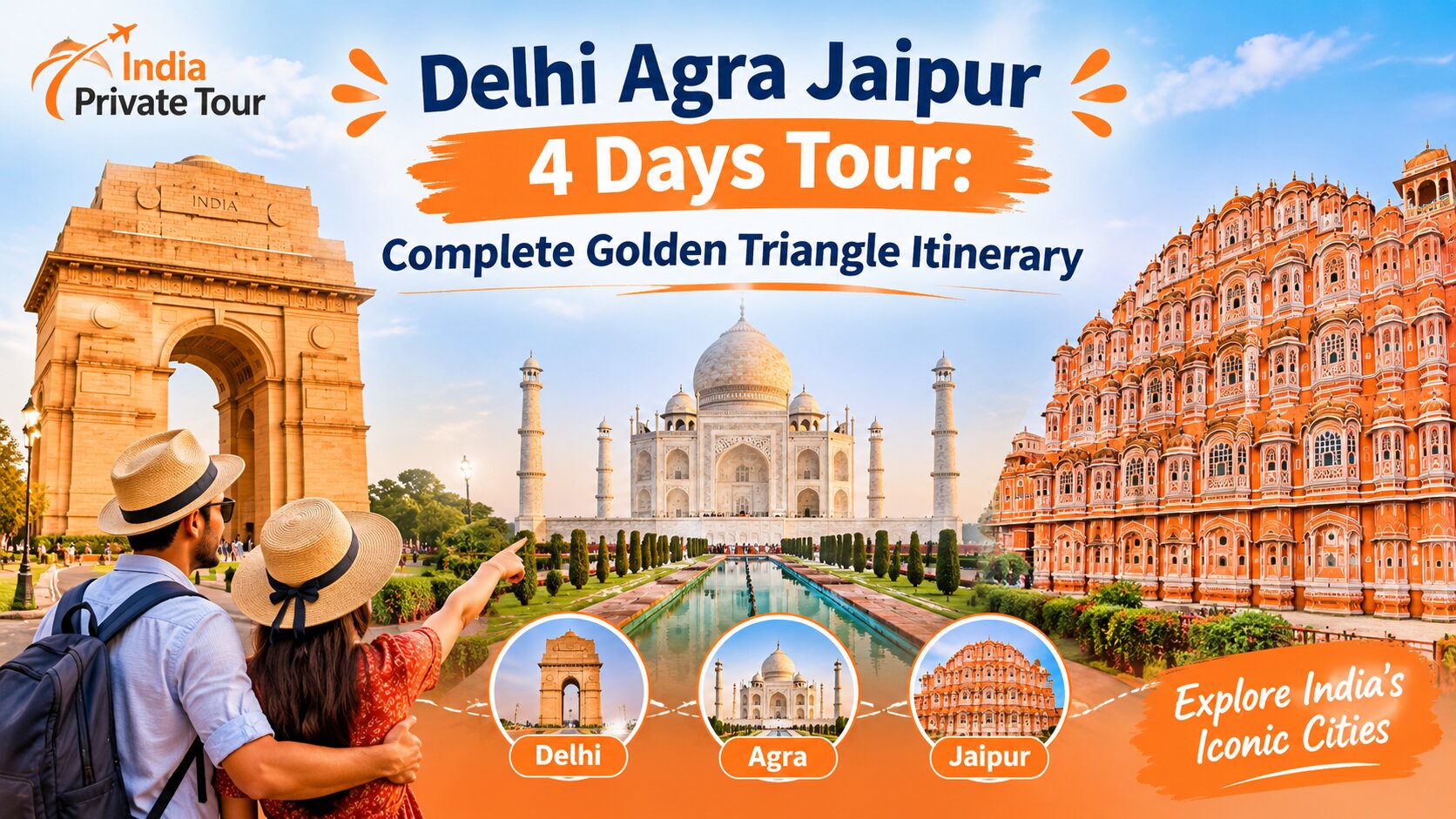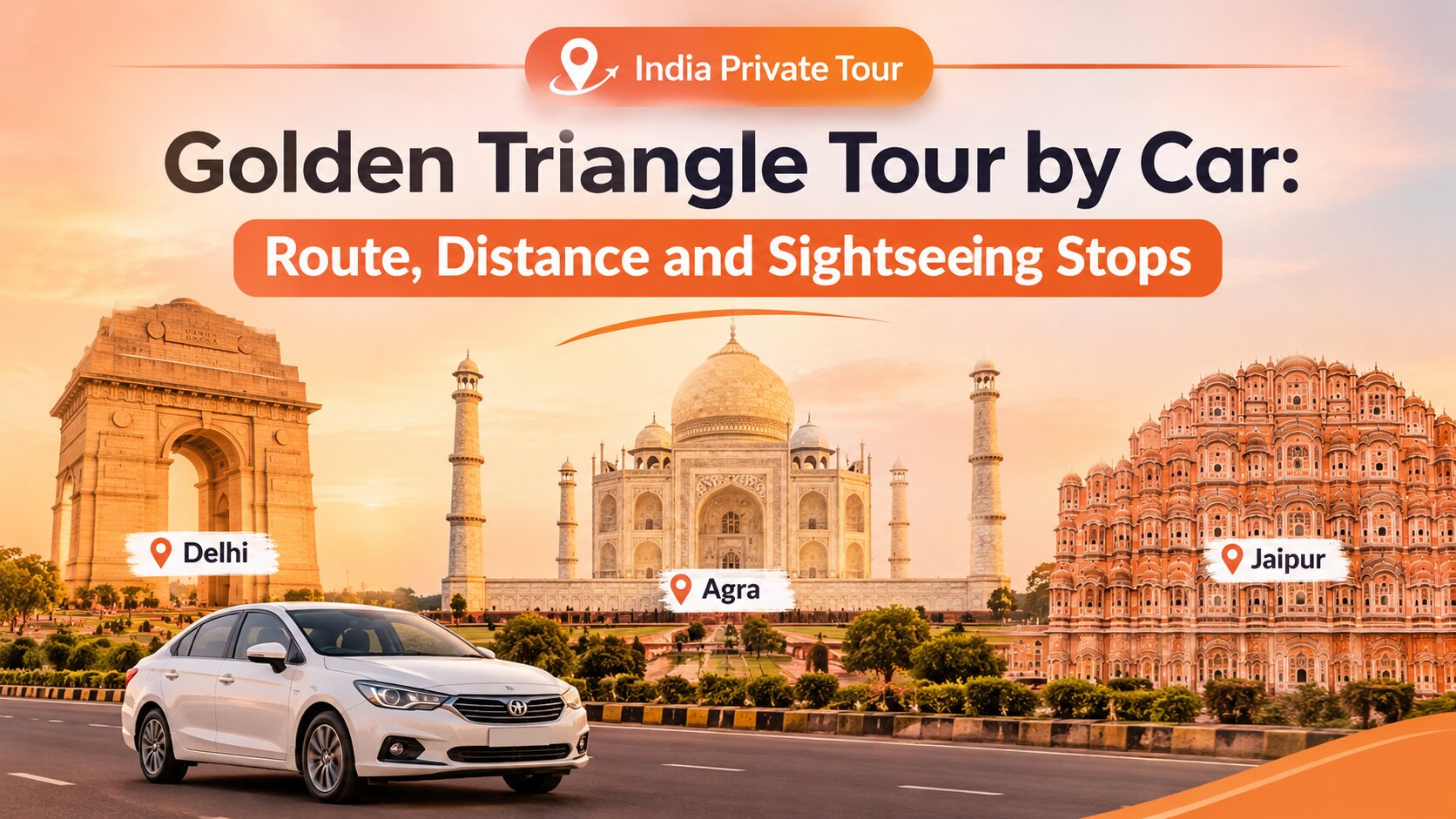
Golden Triangle Tour by Car is one of the most exciting ways to explore India’s rich history, beautiful architecture, colourful markets, and traditional culture. Imagine starting your journey in Delhi, where busy streets, old monuments, and modern buildings exist side by side. From there, you travel to Agra to witness the beauty of the Taj Mahal before continuing towards Jaipur, a city known for its royal palaces, pink buildings, and magnificent forts.
This journey connects three of North India’s most popular tourist destinations: Delhi, Agra, and Jaipur. Each city has its own character, history, food, and local experiences. Travelling between them by car makes the experience more comfortable because you can enjoy the changing landscapes, take short breaks, and explore interesting places along the way.
Whether you are visiting India for the first time, planning a family holiday, or looking for a short cultural getaway, this road trip offers a wonderful introduction to Indian heritage. With a well-planned route, you can cover the major attractions of all three cities in just three days.
What Makes the Golden Triangle Tour by Car Special?
The Golden Triangle is a popular tourist circuit connecting Delhi, Agra, and Jaipur. These three cities form a triangular shape on the map, which gives the journey its name. Although they are located in different states and have different cultural backgrounds, together they offer a memorable picture of India’s history and traditions.
Delhi introduces you to India’s political and historical past. Agra takes you into the Mughal era through its marble monuments and impressive forts. Jaipur welcomes you with Rajput architecture, royal residences, traditional markets, and colourful streets.
Travelling by road allows you to experience these destinations at a comfortable pace. You do not have to keep changing trains or arranging separate transfers between cities. You can travel in the same vehicle, keep your luggage with you, and enjoy the journey with your family or friends.
Another advantage is the freedom to include interesting stops during the journey. For example, Fatehpur Sikri is an excellent historical stop between Agra and Jaipur. You can also enjoy local food, take photographs, and experience small towns and countryside views along the route. This makes the 1 Night / 2 Days Golden Triangle Tour (Agra And Jaipur) a memorable travel experience.
Golden Triangle Tour by Car: Complete Route and Distance
The usual route starts in Delhi, continues to Agra, moves towards Jaipur, and finally returns to Delhi. This route avoids unnecessary backtracking and connects the three destinations in a practical order. Add this
Here is an overview of the approximate road distances:
| Route | Approximate Distance | Estimated Driving Time |
| Delhi to Agra | 230 km | 3–4 hours |
| Agra to Fatehpur Sikri | 40 km | 1 hour |
| Fatehpur Sikri to Jaipur | 205 km | 4–5 hours |
| Jaipur to Delhi | 280 km | 5–6 hours |
| Total journey | Around 755 km | 13–16 hours of driving |
These figures are approximate planning estimates. Actual distances and travel times may change depending on the starting point, road conditions, traffic, and sightseeing breaks.
1. Delhi to Agra: Begin Your Historical Journey
Your road journey begins in Delhi, with Agra as the first major destination. The distance is approximately 230 km, and the drive generally takes around three to four hours via the Yamuna Expressway.
The expressway offers a convenient connection between the two cities. You can leave Delhi in the morning, enjoy a breakfast stop if needed, and reach Agra with enough time to explore its famous attractions.
Agra is known around the world for the Taj Mahal, but the city has much more to offer. Its Mughal architecture, historic gardens, and traditional markets make it an interesting destination for history lovers.
2. Agra to Jaipur: Explore the Historic Road
The next part of the journey connects Agra with Jaipur, covering approximately 240–250 km when travelling through Fatehpur Sikri. The journey usually takes four to five hours without extended sightseeing breaks.
One of the most interesting places on this route is Fatehpur Sikri, a historic Mughal city built by Emperor Akbar. Its red sandstone buildings, courtyards, and impressive gateways offer a glimpse into the architectural style of the Mughal period.
After exploring the historical complex, continue towards Jaipur. As you approach the city, the landscape gradually changes, and the colourful architecture begins to reflect Rajasthan’s royal heritage.
3. Jaipur to Delhi: Complete the Triangle
The final stretch connects Jaipur with Delhi and covers approximately 270–280 km. The drive generally takes around five to six hours, depending on traffic.
After exploring Jaipur’s major attractions, you can begin the return journey to Delhi. If you have additional time, you may plan a short refreshment break along the highway.
This completes the classic Delhi–Agra–Jaipur–Delhi circuit.
Delhi: Where History Meets Modern India
Delhi is more than just the starting point of your journey. It is a city where centuries-old monuments stand alongside modern buildings, shopping areas, and busy commercial streets.
If you have time before leaving for Agra, consider exploring some of the capital’s most famous attractions.
Red Fort
The Red Fort is one of Delhi’s most recognised historical landmarks. Built using red sandstone, this impressive structure reflects the architectural achievements of the Mughal period. Its large gateways, courtyards, and historic buildings make it an interesting stop for visitors.
India Gate
India Gate is a popular landmark located in the heart of New Delhi. The memorial honours Indian soldiers who lost their lives during the First World War and other conflicts. Its surrounding gardens make it a pleasant place to visit and take photographs.
Qutub Minar
Qutub Minar is another important historical attraction in Delhi. This tall stone tower is known for its detailed carvings and Indo-Islamic architectural design. The surrounding complex also contains several historic structures.
Humayun’s Tomb
If you enjoy architecture and peaceful gardens, Humayun’s Tomb is worth including in your sightseeing plans. Its Mughal design and landscaped surroundings offer a different experience from Delhi’s busy streets.
Delhi has many more attractions, but it is important to manage your time. If you are following a short three-day schedule, select only a few places before beginning your drive to Agra.
Agra: Discover the City of the Taj Mahal
Agra is often the highlight of the journey because it is home to one of the world’s most famous monuments. However, spending time here also gives you an opportunity to discover Mughal history, beautiful gardens, and traditional craftsmanship.
Taj Mahal
The Taj Mahal is the main attraction of Agra and one of India’s most celebrated architectural wonders. Emperor Shah Jahan built this white marble monument in memory of his wife, Mumtaz Mahal.
The monument looks beautiful at different times of the day, especially during the early morning when soft sunlight falls on its marble surface. Its symmetrical gardens, detailed carvings, and impressive dome make it a memorable experience.
Try to plan your visit early in the morning or during a suitable visiting session. Remember that the Taj Mahal remains closed to regular visitors on Fridays, so check the opening schedule before finalising your travel dates.
Agra Fort
Agra Fort is another major attraction that deserves a place on your sightseeing list. This historic fort was an important residence of Mughal emperors and features impressive walls, royal halls, and beautiful architectural details.
Inside the complex, you can explore areas such as the Diwan-i-Aam, Diwan-i-Khas, and other historic structures. The fort also offers views towards the Taj Mahal from certain sections.
Tomb of Itimad-ud-Daulah
Often called the Baby Taj, this monument is known for its delicate marble work and decorative designs. It was built by Empress Nur Jahan in memory of her father.
Although smaller than the Taj Mahal, the monument has its own architectural charm. It is a good addition for travellers interested in Mughal history and craftsmanship.
Local Markets of Agra
Before leaving Agra, you can explore its traditional markets for handicrafts, marble souvenirs, leather products, and local specialities. Petha is one of the city’s well-known sweets and is popular among visitors.
Jaipur: Experience Rajasthan’s Royal Heritage
After exploring Agra, your journey continues to Jaipur, popularly known as the Pink City. The city is famous for its grand forts, royal residences, traditional jewellery, colourful bazaars, and beautiful architecture.
Jaipur offers a completely different atmosphere from Delhi and Agra. Its historic streets and buildings reflect Rajasthan’s royal traditions.
Amber Fort
Amber Fort is one of Jaipur’s most famous attractions. Located on a hill outside the main city, this impressive fort is known for its large courtyards, decorative gateways, and beautiful palace sections.
The Sheesh Mahal, or Mirror Palace, is one of its most interesting features. Its decorative mirror work and detailed interiors reflect the artistic skills of the period.
Hawa Mahal
Hawa Mahal is one of Jaipur’s most photographed buildings. Its distinctive pink facade features numerous small windows designed to allow royal women to observe street activities while maintaining privacy.
You can stop here for photographs and admire the building’s unique architecture.
Jal Mahal
Jal Mahal is a beautiful palace situated in the middle of Man Sagar Lake. Its location creates a striking view, especially when the surrounding hills and water reflect the changing colours of the sky.
Visitors generally enjoy viewing and photographing the palace from the lakeside.
City Palace
Located in the heart of Jaipur, City Palace offers a look into the royal history of Rajasthan. The complex features courtyards, galleries, museums, and beautifully decorated buildings.
It is an excellent place to learn about Jaipur’s royal family, traditional clothing, weapons, and artistic heritage.
Jantar Mantar
Jantar Mantar is a historic astronomical observatory built by Maharaja Sawai Jai Singh II. It contains large instruments designed to study celestial movements and measure time.
Its scientific purpose and unusual architectural structures make it a fascinating place to explore.
For travellers who prefer convenience, a private car with a driver can make the entire journey easier to manage. Explore the 2 Nights and 3 Days Golden Triangle Tour and plan your journey through three of India’s most fascinating cities.
Golden Triangle Tour Itinerary: A Practical 2 Nights and 3 Days Plan
A short trip requires careful planning, especially when you want to visit three major cities in three days. The following itinerary follows the route and sightseeing sequence offered in the India Private Tour package.
Day 1: Delhi to Agra – Taj Mahal and Local Sightseeing
Start your morning in Delhi and travel towards Agra after breakfast. On arrival, check in at your hotel and take some time to relax before beginning your sightseeing.
Your first major stop can be the Taj Mahal. Spend time exploring its architecture, gardens, and marble details. Later, visit Agra Fort to discover its historic courtyards and royal buildings.
If your schedule allows, include the Tomb of Itimad-ud-Daulah. Return to your hotel in the evening and enjoy an overnight stay in Agra.
Places covered:
- Delhi to Agra road journey
- Taj Mahal
- Agra Fort
- Tomb of Itimad-ud-Daulah
- Overnight stay in Agra
Day 2: Agra to Jaipur via Fatehpur Sikri
After breakfast, check out from your hotel and begin your drive towards Jaipur. Plan a stop at Fatehpur Sikri to explore its historic buildings and impressive Mughal architecture.
After sightseeing, continue your journey to Jaipur. On arrival, check in at your hotel and take some time to relax.
Depending on your arrival time, you can explore nearby markets or enjoy the city’s local food. You can also see the famous Hawa Mahal from the outside during your drive through the city.
Enjoy an overnight stay in Jaipur.
Places covered:
- Agra to Fatehpur Sikri
- Fatehpur Sikri historical complex
- Drive towards Jaipur
- Hawa Mahal exterior view
- Overnight stay in Jaipur
Day 3: Jaipur Sightseeing and Return to Delhi
Start your final day with breakfast before visiting Amber Fort. Explore its impressive palace sections, courtyards, and historic architecture.
Continue towards Jal Mahal for a photograph stop. Later, visit City Palace and Jantar Mantar to learn more about Jaipur’s royal history and scientific heritage.
After completing your sightseeing, begin the return drive to Delhi. Your three-day journey ends with a memorable experience of India’s history, architecture, and culture.
Places covered:
- Amber Fort
- Jal Mahal
- City Palace
- Jantar Mantar
- Jaipur to Delhi return journey
This itinerary is suitable for travellers who have limited time. However, it involves a busy schedule, particularly on the final day. If you prefer longer sightseeing sessions, consider extending the trip by one or two days.
Golden Triangle Tour by Road: Why Choose a Private Car?
Travelling between Delhi, Agra, and Jaipur involves several hours on the road. Choosing the right transport can make a noticeable difference to your overall experience.
A private car gives you more flexibility than travelling with fixed group departure schedules. You can keep your luggage in one vehicle and travel between destinations without arranging separate transfers. This makes the 3 Nights / 4 Days Golden Triangle Tour a convenient option for exploring all three destinations comfortably.
Here are some reasons why road travel is a convenient option:
- Flexible travel schedule: You can plan your departure time according to your sightseeing requirements and hotel check-in schedule.
- Comfortable transfers: Travelling in an air-conditioned vehicle makes long journeys more comfortable, particularly during warmer months.
- Convenient sightseeing: You can plan suitable stops for refreshments, photographs, and historical attractions along the route.
- Suitable for families: A private vehicle makes it easier for families and small groups to travel together and manage their belongings.
- Better time management: A planned route helps reduce unnecessary travel between cities and makes the most of a short holiday.
When booking, confirm the vehicle category, driver arrangements, sightseeing inclusions, parking charges, and any additional costs in advance.
Best Time for Golden Triangle Road Trip
Weather can have a major impact on your sightseeing experience, especially when you are travelling between three cities with several outdoor attractions.
Best time for Golden Triangle road trip is from October to March is generally considered the most comfortable season for exploring Delhi, Agra, and Jaipur.
October to March: Pleasant Weather
These months are suitable for sightseeing, photography, and exploring historical monuments. The weather is generally more comfortable than the summer season, although winter mornings can be foggy, particularly in parts of North India.
If you are planning a winter visit, allow some extra time for road travel because fog may affect visibility and driving conditions.
April to June: Summer Season
Summer temperatures can become quite high in Delhi, Agra, and Jaipur. Outdoor sightseeing during the afternoon may feel uncomfortable.
If you travel during these months, plan monument visits in the early morning and carry drinking water, sunscreen, and suitable clothing.
July to September: Monsoon Season
The monsoon brings occasional rainfall and greener landscapes. While the weather can feel cooler, rain may affect road conditions and sightseeing schedules.
Keep some flexibility in your itinerary if you are travelling during this period.
Overall, October to March is a good choice for most travellers, but the right dates depend on your weather preferences and travel plans.
What Should You Keep in Mind Before Starting the Journey?
A little preparation can make your road trip smoother and more enjoyable.
- Book hotels in advance: Choose convenient accommodation in Agra and Jaipur to avoid wasting time on local transfers.
- Check monument timings: Confirm opening hours and weekly closure days before planning your sightseeing.
- Carry identification: Keep valid identification documents and travel confirmations with you.
- Plan comfortable clothing: Choose clothes and footwear suitable for walking around forts, monuments, and gardens.
- Keep travel essentials ready: Carry drinking water, basic personal items, phone chargers, and any necessary medicines.
- Confirm your vehicle: Check the vehicle type, air-conditioning, luggage space, and travel arrangements before booking.
- Allow extra driving time: Traffic, road conditions, and sightseeing breaks can affect your arrival schedule.
A well-organised journey is not just about covering destinations. It is also about enjoying the experience without feeling rushed at every stop.
Plan Your Golden Triangle Tour by Car with India Private Tour
Ready to explore India’s famous Golden Triangle by road? Enjoy a memorable journey through Delhi, Agra, and Jaipur while discovering historic monuments, beautiful forts, royal palaces, and local culture. Travelling by private car gives you the flexibility to enjoy sightseeing stops, take breaks along the way, and explore each destination at a comfortable pace. Whether you are planning a family holiday, a romantic trip, or a vacation with friends, India Private Tour can help arrange comfortable transportation, hotel accommodation, and sightseeing according to your travel preferences.
Explore the Golden Triangle Tour by Car Package and get complete details about the travel route, city-to-city distances, day-wise itinerary, popular sightseeing stops, accommodation options, package inclusions, and tour cost based on your travel dates and group size.
Contact India Private Tour to discuss your travel plans and request a personalised quotation for your family, couple, or group holiday.
Phone: +91-9711929163
Email: info@indiaprivatetour.comckages
Frequently Asked Questions